Plants, Air, and What NASA Actually Proved - Revisited
A follow-up to our 2017 post on air-cleaning houseplants
Back in 2017 we shared an infographic about NASA's famous Clean Air study and its list of the best air-filtering houseplants. It's one of our most-visited posts, and nearly a decade on, the science has caught up with a more honest picture. Worth revisiting.
The NASA study, in context
The 1989 study was real, the plants were real, and the results were genuinely interesting. NASA researchers found that certain common indoor plants could help remove volatile organic pollutants from the air. The problem, it turns out, was how those results travelled.
The experiment was conducted in a sealed chamber in a lab, a contained environment with very little in common with a house or office. The data was never further interpreted to reflect what the findings would mean in a real indoor environment with natural air exchange.
What newer research found
A critical missing variable is what building scientists call the air exchange rate: how quickly outdoor air naturally replaces indoor air through gaps, walls, and ventilation systems. When a 2019 study modelled plant performance against real-world conditions, it found you would need between ten and 1,000 plants per square metre to match what a building's passive ventilation already achieves. For a normal 140 m² house or office, that works out to around 680 plants. Two open windows do the same job.
So the viral infographic oversold the science. That is not the end of the story though.
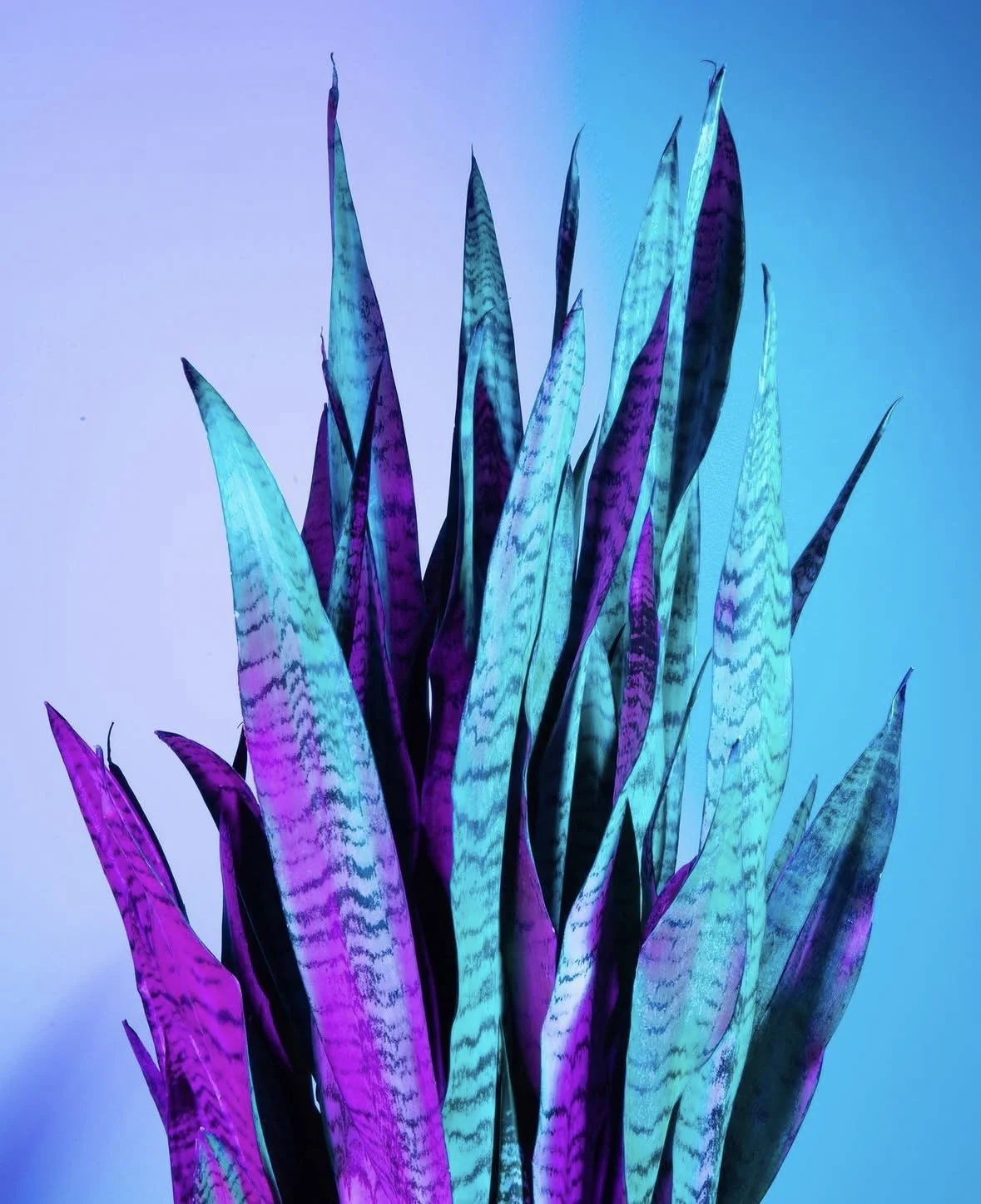
Image: Lindsey Rickert
Which plants perform best
More recent research has refined which plants perform best even under lab conditions. A June 2024 peer-reviewed study in Scientific Reports tested 13 common indoor plants and found that the snake plant (Sansevieria trifasciata) demonstrated the highest purification per unit leaf area for benzene removal. As benzene concentration increased, the plant's purification capacity also increased, suggesting an adaptive response to higher pollutant levels. A January 2025 study found Aglaonema reduced benzene levels by 92% within 12 hours in sealed test conditions.
These results are real. They just don't translate directly to sitting in a normal room. Opening a window remains more effective than any arrangement of plants.
Where the real evidence is strongest
Here is what the research does support convincingly, and why we still think plants belong in studios and workspaces.
A 2024 study in Scientific Reports, drawing on longitudinal data from over 600 white-collar workers, found that indoor nature exposure increases employee wellbeing through improved energy, motivation, and mental resilience. Critically, this effect was not limited to people who actively sought out nature. The environment itself produced the benefit regardless of individual disposition.
Separate research found that participants working alongside indoor plants showed significantly lower cortisol levels than those in conventional spaces. A measurable, body-level stress reduction, not just a feeling.
So, should you fill your studio with plants?
Yes, just not because they are secretly running an air purification system. The snake plant and peace lily won't replace your ventilation. But the evidence for how they affect the way you feel in a space, calmer, more focused, more at ease, is now considerably stronger than it was in 2017.
The NASA list still holds up as a guide to low-maintenance, resilient species: snake plants, spider plants, peace lilies, pothos. We'd still recommend them. We'd just be more careful about why.
Image: Lindsey Rickert
https://www.lindseyrickert.com/botanicals
Where the real evidence is strongest
Here is what the research does support convincingly, and why we still think plants belong in studios and workspaces.
A 2024 study in Scientific Reports, drawing on longitudinal data from over 600 white-collar workers, found that indoor nature exposure increases employee wellbeing through improved energy, motivation, and mental resilience. Critically, this effect was not limited to people who actively sought out nature. The environment itself produced the benefit regardless of individual disposition.
Separate research found that participants working alongside indoor plants showed significantly lower cortisol levels than those in conventional spaces. A measurable, body-level stress reduction, not just a feeling.
So, should you fill your studio with plants?
Yes, just not because they are secretly running an air purification system. The snake plant and peace lily won't replace your ventilation. But the evidence for how they affect the way you feel in a space, calmer, more focused, more at ease, is now considerably stronger than it was in 2017.
The NASA list still holds up as a guide to low-maintenance, resilient species: snake plants, spider plants, peace lilies, pothos. We'd still recommend them. We'd just be more careful about why.